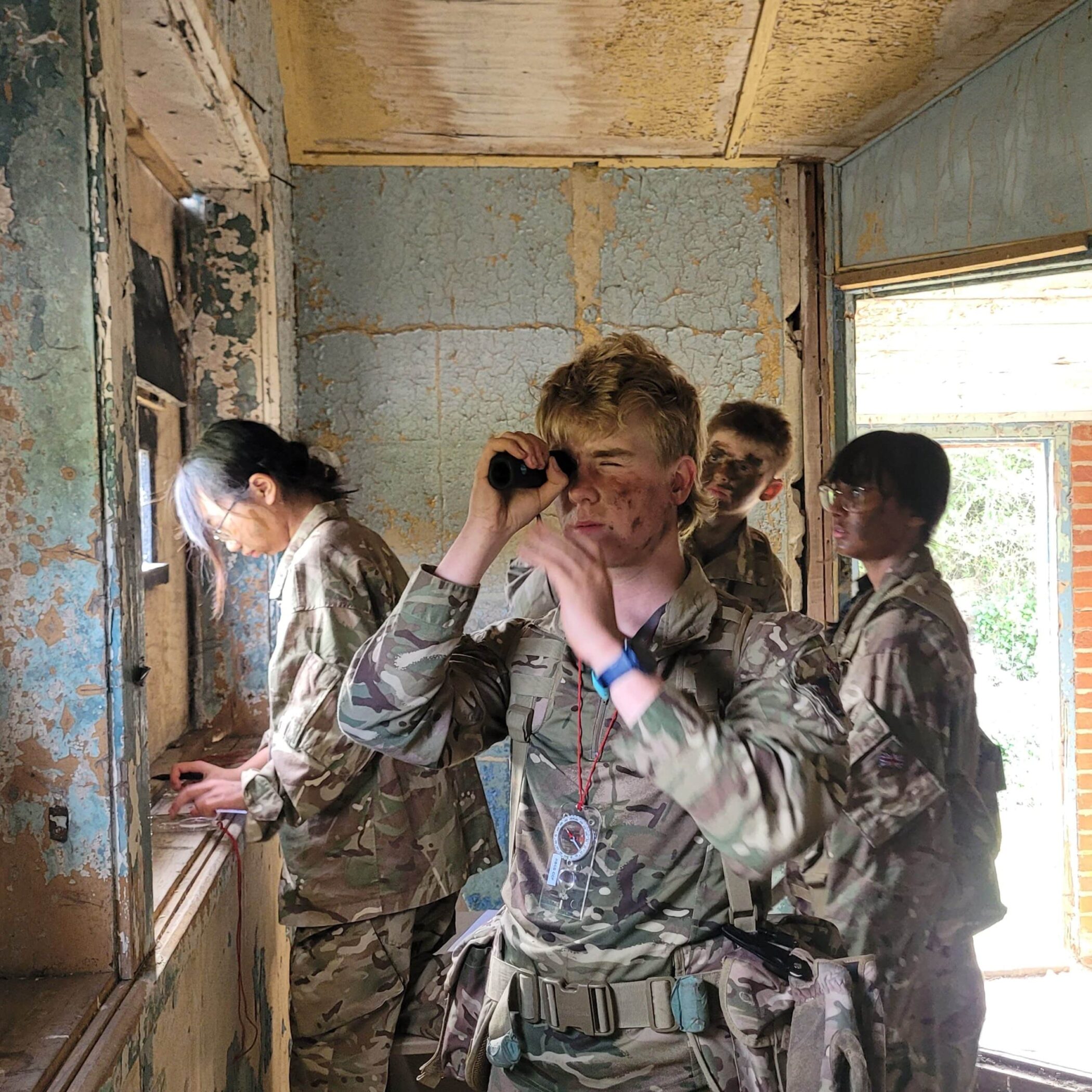
Reading Blue Coat CCF cadets took part in Exercise Eagle Landing, the third and final Field Training Exercise of the academic year. The exercise focused on introducing Year 9 cadets to fieldcraft and tactical training, while providing leadership opportunities for cadets in Years 10 to 12.
Training began on Saturday afternoon with senior cadets taking part in Training in Built Up Areas exercises led by Sgt Simmonds from CTT. Using both laser tag equipment and Cadet GP rifles firing blanks, cadets practised house clearing drills at a repurposed training building known as “The Asylum”. The evening concluded with a Night Navigation Exercise after cadets had established their sleeping areas.
On Sunday morning, cadets in Years 10 to 12 prepared and delivered a series of training stands for the arriving Year 9 cadets. These included observation and patrolling exercises near a simulated downed Lynx helicopter, platoon harbour routines and sentry duties, and fire and movement drills through woodland terrain. Following the morning’s training, cadets established their harbour area where they would sleep overnight in Bashas before enjoying lunch together.
The afternoon saw cadets rotate through further exercises including observation posts and range cards, fire control orders, air rifle handling, and section battle drills. Older cadets demonstrated tactical movements and leadership techniques before Year 9 cadets had the opportunity to put their own training into practice.
As evening fell, cadets completed reconnaissance patrols to locate a friendly agent, gather intelligence on suspected enemy positions, and investigate whether another CCF contingent remained active in the area. The day concluded with a Noise and Light Demonstration, highlighting how easily sound and visibility can compromise positions in the field.
Monday morning began with a defensive “stand to” as cadets protected their harbour area from a simulated enemy attack. After breaking camp and moving to a safe area for breakfast, cadets received operational orders before carrying out rolling section attacks through the training area. Year 10 cadets took on command responsibilities with confidence and composure, while Year 9 cadets demonstrated impressive progress in applying the fieldcraft skills they had learned throughout the weekend.
The final platoon attack brought the exercise to a close before cadets returned to the administration area to clean weapons, hand back equipment and enjoy lunch together.
By the end of the exercise, all Year 9 cadets had successfully passed their One Star Fieldcraft module and were awarded their Competent Cadet rank slides. Cadets who took part in command roles also achieved their Two Star Fieldcraft qualification.
Major Scoble praised the commitment and resilience shown by all involved, with cadets returning to school “victorious, tired and a lot more skilled in fieldcraft and tactics”.